
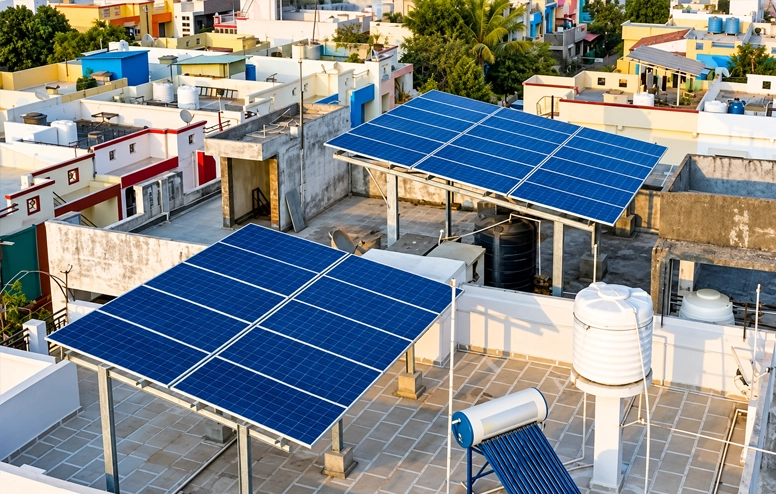
How Much Can You Save with Solar Panels in Rajasthan?
Thinking about rooftop solar for your home or business? Learn what affects solar savings in Rajasthan, how to estimate the right system size, and which costs to consider before making a decision.
Understanding Solar Savings in Rajasthan
For many households and businesses, electricity is an expense that returns every month. Rooftop solar can help reduce that bill by allowing a property to generate some of its own electricity. Rajasthan receives strong sunlight for much of the year, making solar worth considering, but the savings at each property depend on how the system is designed and used.
The most useful question is not simply how many panels fit on a roof. It is how much electricity the property uses, when that electricity is needed, and how much solar power can be used on site.
What Determines Your Solar Savings?
1. Your Electricity Consumption
Start by checking several recent electricity bills. Look at the units consumed, the tariff, and whether usage changes between seasons. A home with regular daytime consumption may use more of its solar generation directly. A business that operates during daylight hours may also be able to make good use of rooftop generation.
2. Roof Space and Sunlight
The usable roof area, direction, tilt, shade from nearby buildings, and placement of water tanks or other equipment all affect system design. A site survey helps identify the practical panel layout rather than relying on roof size alone.
3. System Size and Equipment
A larger system can generate more electricity, but it is not automatically the best choice. The capacity should suit the property's consumption, roof conditions, connection rules, and budget. Panels, inverters, mounting structures, wiring, protection equipment, and installation quality all influence performance.
4. How Electricity Is Used
Solar generation is usually highest during daylight. If most of the property's electricity use happens at night, the benefit will depend on the applicable billing arrangement and whether battery storage is included. Do not assume that every unit exported to the grid is credited at the same rate as a unit purchased from the utility.
How to Make a Sensible Estimate
- Collect recent electricity bills and note monthly unit consumption.
- Ask for a site assessment that checks shade, roof condition, and usable area.
- Request the estimated annual generation, system capacity, and itemised installation cost.
- Confirm applicable grid-connection requirements and any eligible subsidy before calculating the final cost.
- Compare warranties, service support, and equipment specifications, not only the headline price.
Look Beyond the Initial Price
A solar quotation should explain what is included: panels, inverter, mounting structure, wiring, safety devices, installation, approvals where applicable, and after-sales support. Ask what is excluded too. Cleaning, repairs, inverter replacement outside warranty, and changes to the roof or electrical system can affect long-term ownership costs.
Subsidies and electricity rules can change, and eligibility depends on the scheme and property. Treat a savings figure as an estimate until the system design, tariff, generation assumptions, and current rules have been checked.
Planning Solar for Your Property
Nexsun Solar works with residential, commercial, industrial, and agricultural customers to assess their solar requirements. A site visit and review of electricity usage can help identify a suitable capacity and provide a more realistic estimate for your property.
Conclusion
Solar can reduce grid electricity use, but the result depends on the right system size, good installation, and how well generation matches consumption. Begin with your electricity bills and a proper site assessment, then compare clear quotations before making a decision.
Frequently Asked Questions: